Woman Warrior
A Virtual Exhibition by Ieva Mizgeraite
EN: Woman Warrior — a triptych
I am a Warrior. Not as a metaphor — as a lived reality. Every day I have fought in the world outside: for truth, for my values, against people who hide behind masks. But every external battle came at an internal cost — anger, self-doubt, dilemmas that quietly became walls.
I call this project a triptych. Not because of the number of images. A triptych — because of three layers: three inner states, three encounters with anger, three distinct series that together form a single journey. The form follows the content, not the other way around.
This triptych did not arrive quickly. It matured over a month and a half — slowly, as every genuine inner process must. Together with co-creators Aleksandra Sokolova and Martynas Žakevičius, we found a place that became our collective creative heart: Belmontas, in Vilnius. Over the course of that month, nature transformed itself — in one location, at different moments, it offered us colours, light, and atmosphere that could not have been planned or predicted. That shifting nature is not merely a backdrop. It is a metaphor. Honest, authentic, uncontrollable. Much like the inner world itself.
For me, this was also a series of firsts. The first time I worked as a photographer in nature — navigating its technical demands, its unpredictability, its insistence that you surrender control. And the first time I placed myself inside my own project — not only seeing through the lens, but feeling with my heart and body. It was both exposing and liberating.
In the first series, she meets her anger. She approaches it carefully, the way one approaches something wild — trying to understand, to tame. It demands courage: to remove the protective mask, to look anger in the eye. Not to run. To witness.
In the second series, that same anger takes on a form — it becomes a man, a stranger who is also familiar. Their encounter unfolds through body language, movement, the katana. This is not war — it is a dialogue with what we have long been running from. Powerful, unavoidable, necessary.
The third series is me. The woman in whom all of this inner world still burns. But now she knows how to speak with it. How to receive it. The warrior genes have not disappeared — but the fight has changed. Only understanding. Only the embrace — of her inner enemy, of her inner child.
From all that slow maturation, technical challenge, first experiences, and deep moments — these frames were born. Each one is not simply a photograph. It is a moment that was lived.
— Ieva Mizgeraite, Vilnius
Dedicated to all women.
LT: Moteris Karė - Triptikas
Esu Karė. Ne metafora — tikrovė. Kasdien kovojau su išoriniu pasauliu: už teisybę, savo vertybes, prieš žmones-kaukes, kurie slepia tikrąjį veidą. Bet kiekviena išorinė kova atnešdavo kainą viduje — pyktį, abejonę savimi, dilemas, kurios ilgainiui tapo sienomis.
Ši projektą vadinu triptiku. Jį taip vadinu ne dėl nuotraukų skaičiaus. Triptiku — dėl trijų sluoksnių: trijų vidinių būsenų, trijų susitikimų su pykčiu, trijų skirtingų serijų, kurios kartu sudaro vieną kelionę. Forma seka turinį, o ne atvirkščiai.
Šis triptikias gimė ne per naktį. Jis brendęs pusantro mėnesio — lėtai, kaip ir kiekvienas tikras vidinis procesas. Kartu su bendrakūriais Aleksandra Sokolova ir Martynu Žakevičiumi suradome erdvę, kuri tapo mūsų visų kūrybine širdimi: Belmontas, Vilniuje. Gamta per tą mėnesį keitėsi pati — vienoje vietoje, skirtingomis akimirkomis, ji dovanojo mums spalvas, šviesas ir nuotaikas, kurių nebuvo įmanoma suplanuoti. Ta kintanti gamta nėra tik fonas — ji yra metafora. Tikra, autentiška, nekontroliuojama. Lygiai kaip vidinis pasaulis.
Man tai buvo pirmoji patirtis fotografuoti gamtoje — su visais jos techniniais iššūkiais, nenuspėjamumu, reikalavimu prisitaikyti ir atleisti kontrolę. Ir pirmoji patirtis pačiai dalyvauti savo projekte — ne tik matyti per objektyvą, bet jausti širdimi ir kūnu. Tai buvo pažeidžiama ir išlaisvinanti patirtis vienu metu.
Pirmoje serijoje moteris susitinka su savo pykčiu. Priartėja prie jo atsargiai, kaip prie laukinio — bando suprasti, prijaukinti. Tai reikalauja drąsos: nuimti apsauginę kaukę, pažvelgti pykčiui į akis. Ne bėgti. Žiūrėti.
Antroje serijoje tas pats pyktis įgyja pavidalą — jis tampa vyru, svetimu, bet pažįstamu. Jų susitikimas vyksta kūno kalba, judesiu, katana. Tai ne karas — tai dialogas su tuo, nuo ko ilgai bėgome. Stiprus, neišvengiamas, būtinas.
Trečia serija — tai aš. Moteris, kurioje kunkuliuoja visas tas vidinis pasaulis. Tik dabar ji jau moka su juo kalbėtis. Moka priimti. Kovos genai niekur nedingo — bet kova tapo kitokia. Su supratimu. Su apkabinimu — savo vidinio priešo, savo vidinio vaiko.
Iš viso to brendimo, techninių iššūkių, pirmų kartų ir gilių akimirkų — gimė šie kadrai. Kiekvienas jų — ne tik nuotrauka. Tai išgyventas momentas.
— Ieva Mizgeraite, Vilnius
Skiriama visoms moterims.
Between Inner Darkneses/
Tarp Vidinių Tamsų
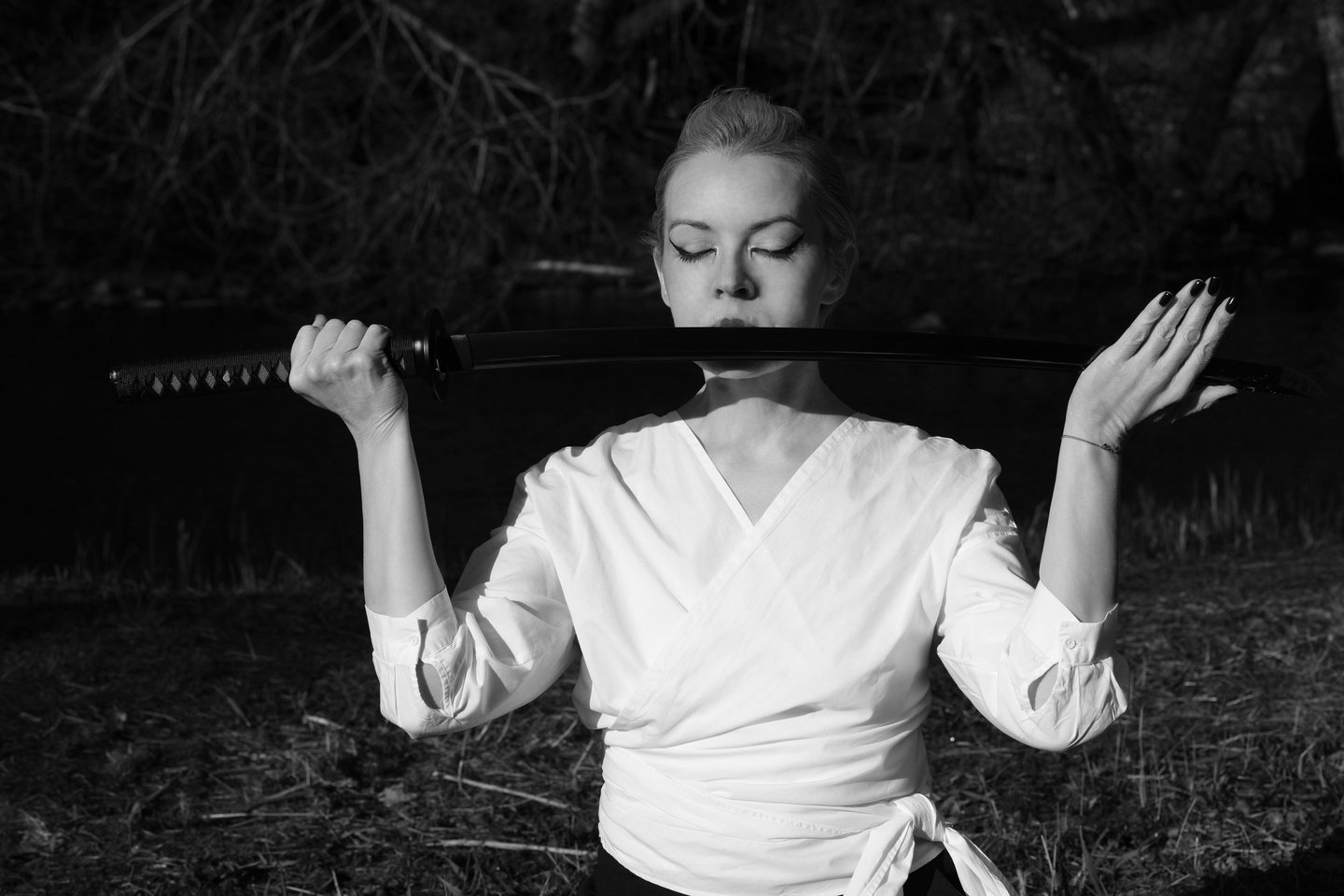
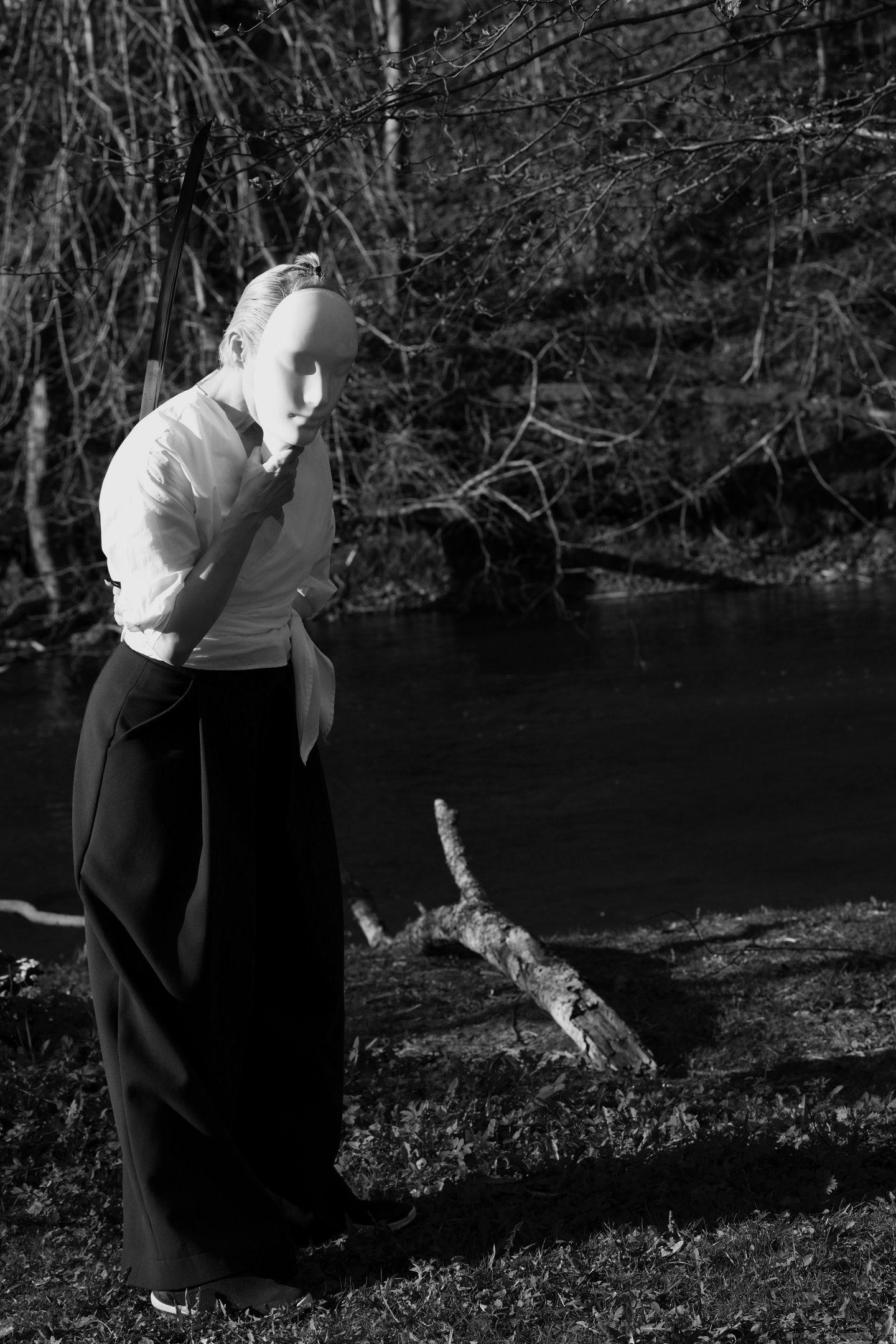
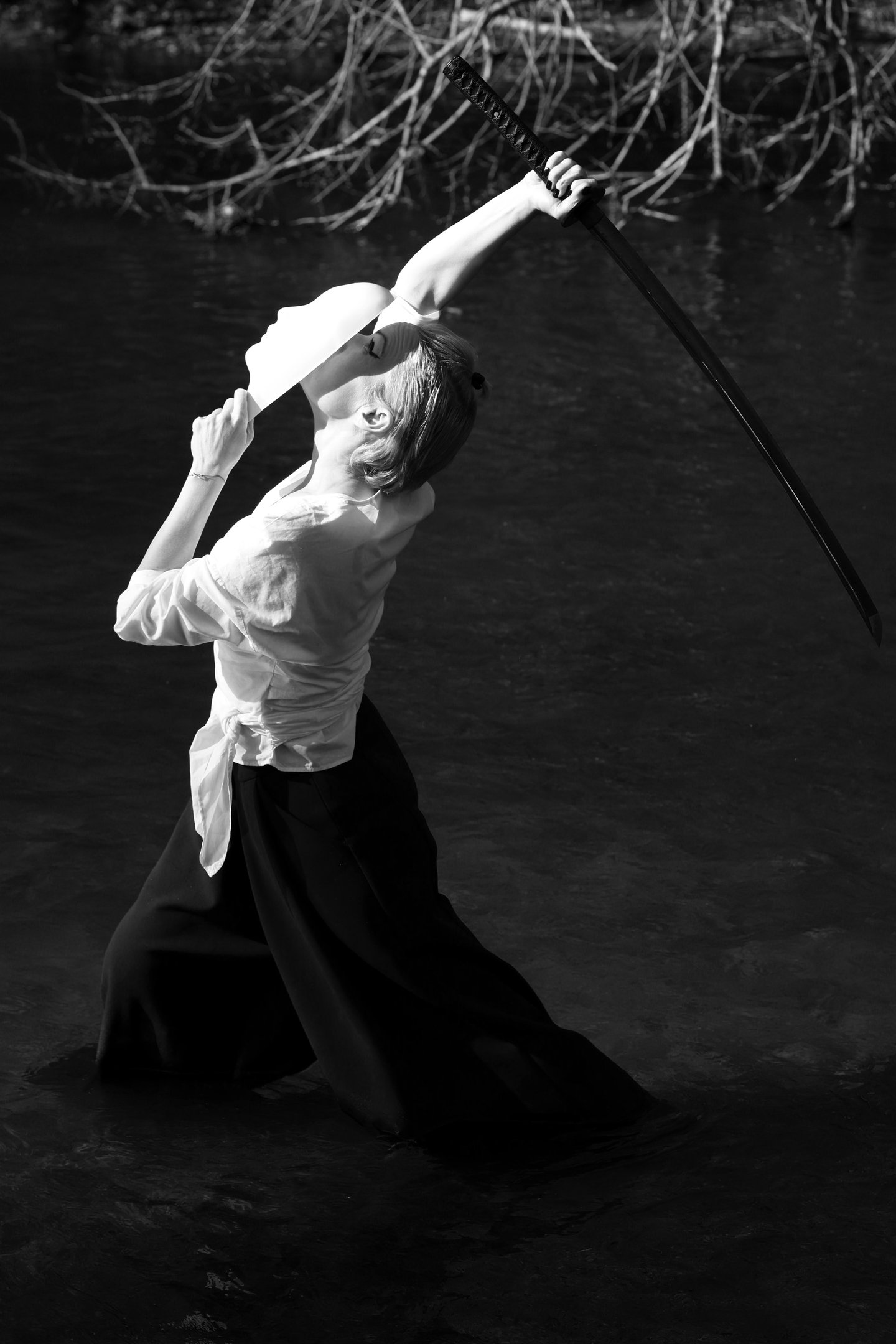
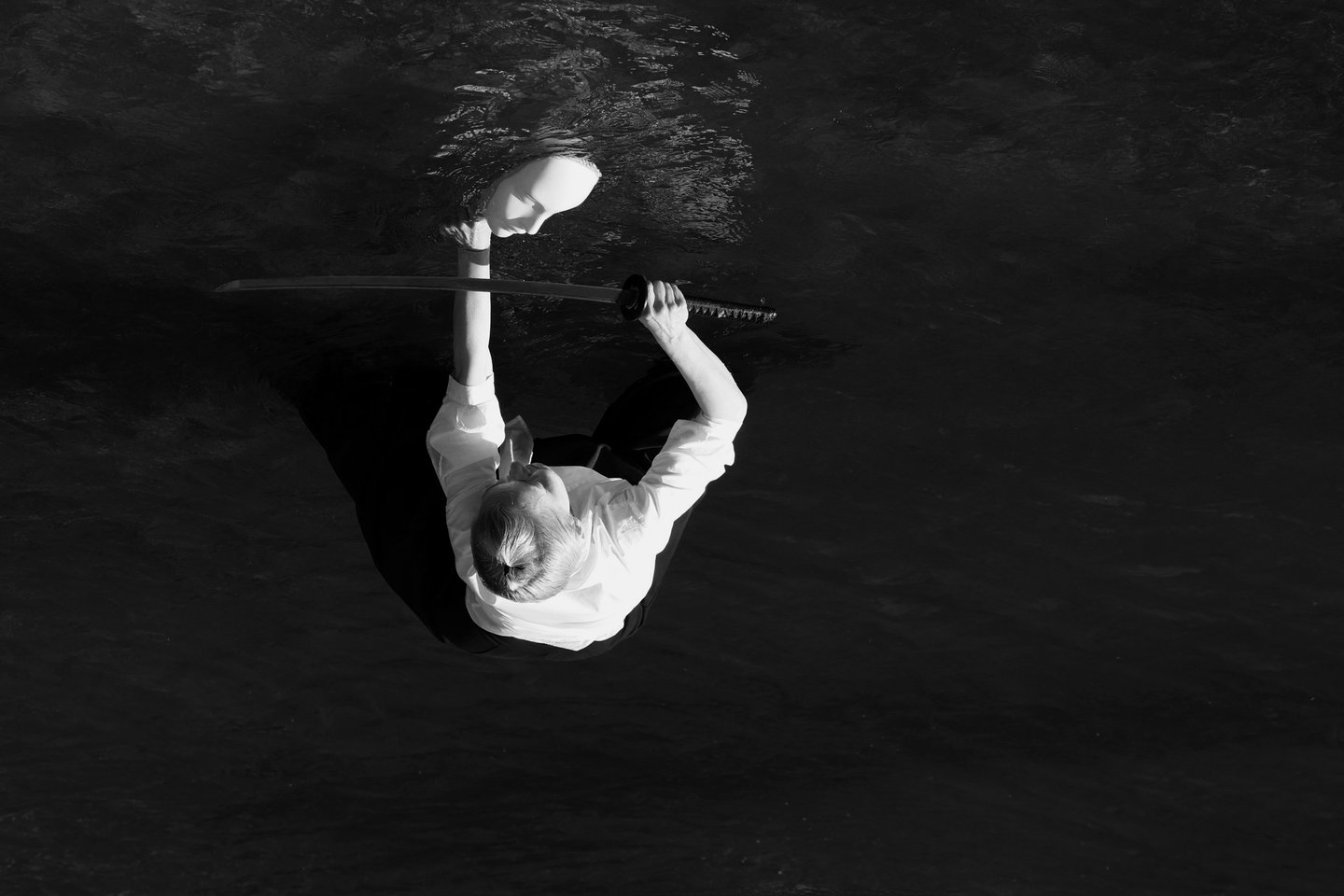
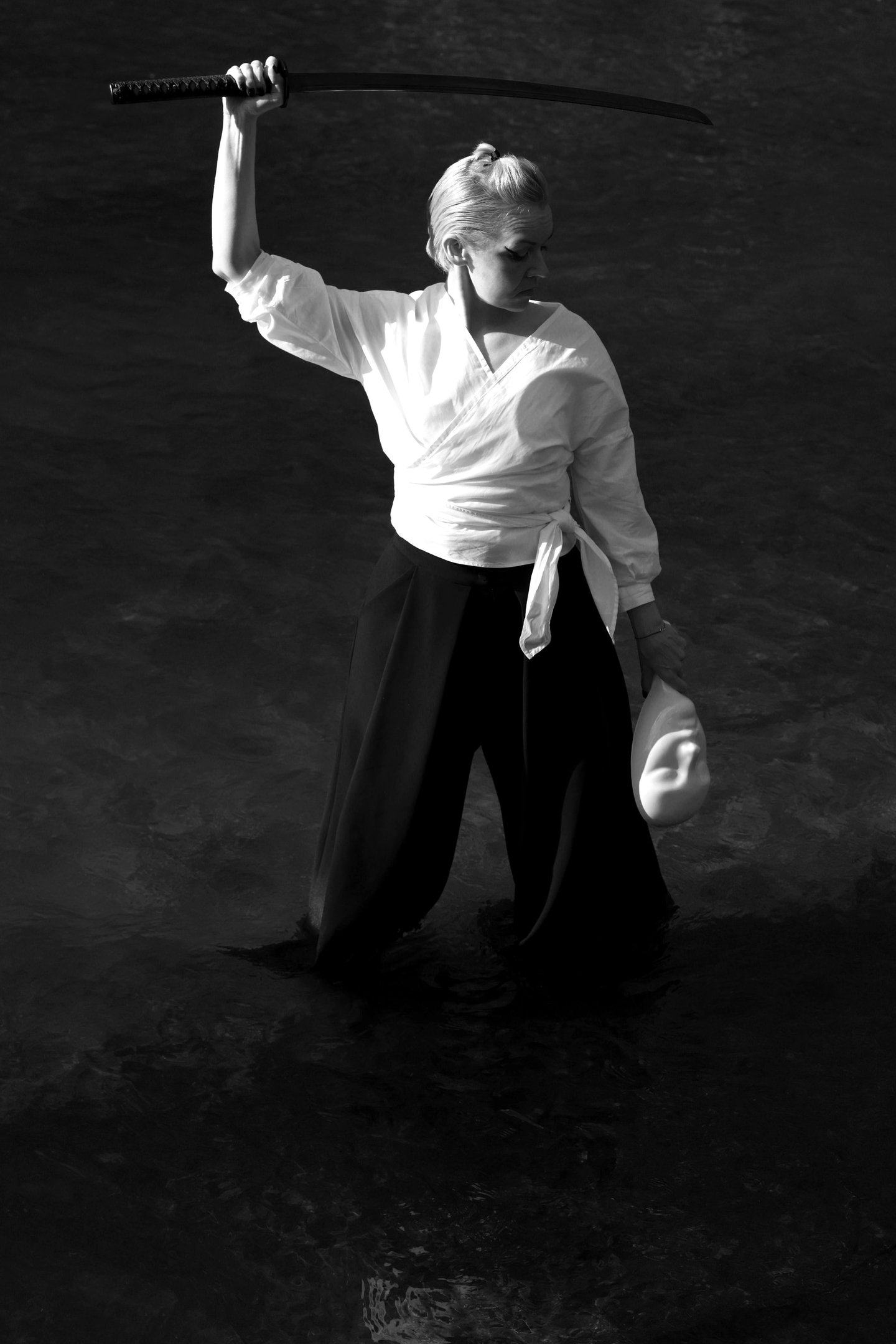
EN: She stood between two darknesses: the one she knew, and the one she had not yet met. She did not run. She approached — as one approaches a silence that has long been waiting — and let it be. Anger became not an enemy — but a part of her.
LT: Ji stovėjo tarp dviejų tamsų: pažįstamos ir dar nepažintos. Ji nepabėgo. Ji priartėjo — kaip prie tylėjusio pykčio, kuris laukė — ir leido jai būti. Pyktis tapo ne priešu — o dalimi jos.
Stranger. Familiar. / Svetimas. Pažįstamas.
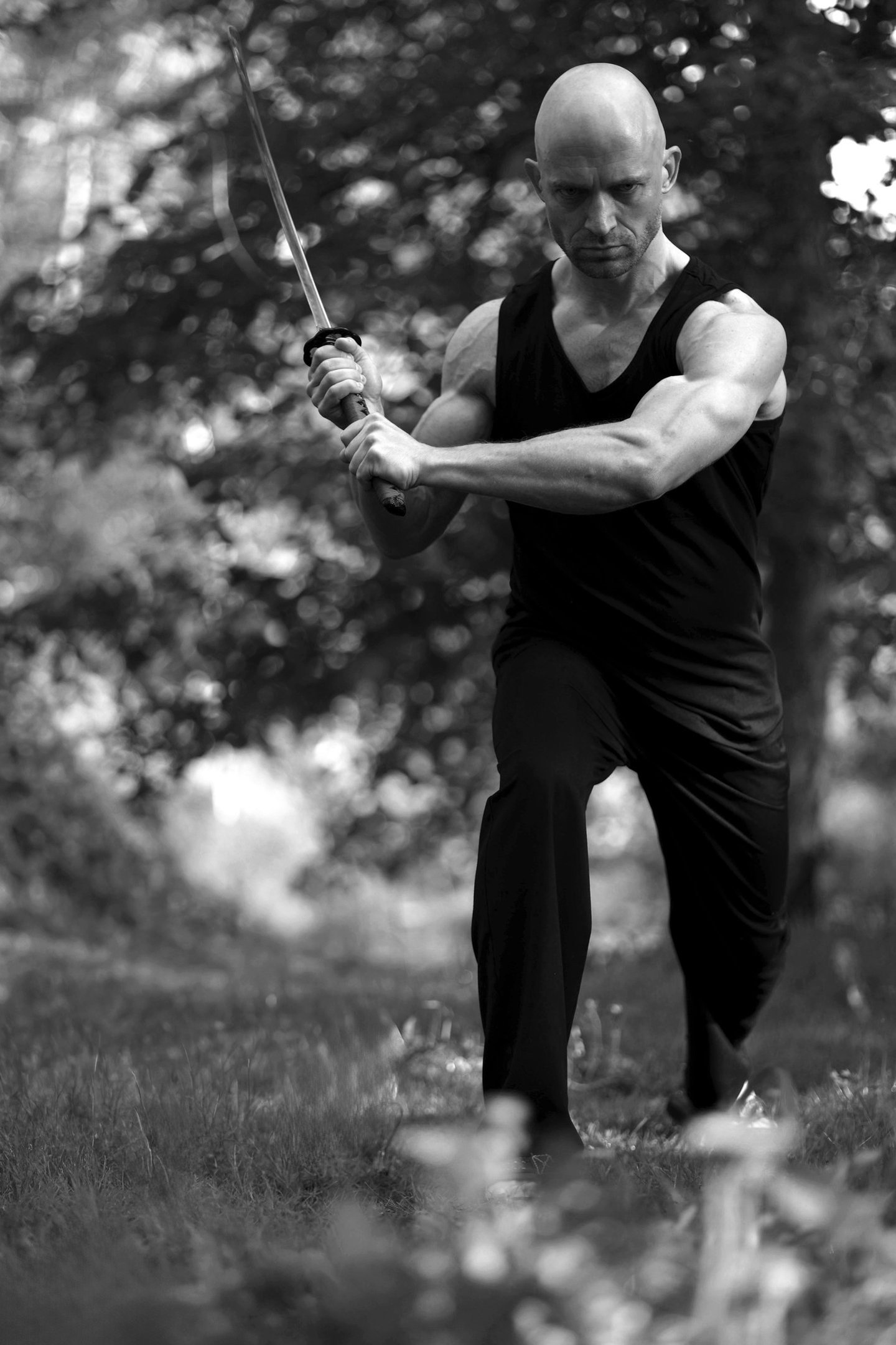
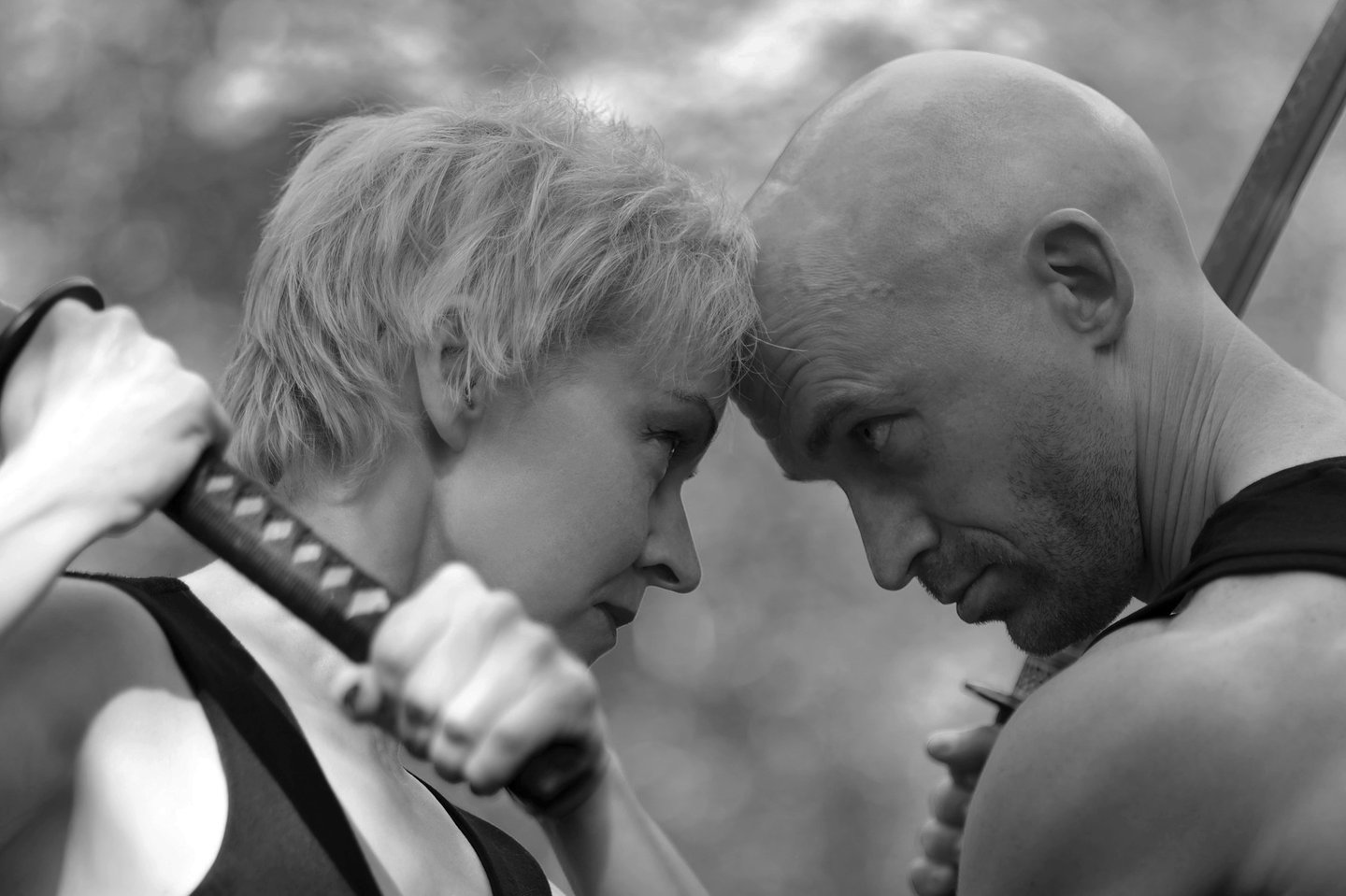
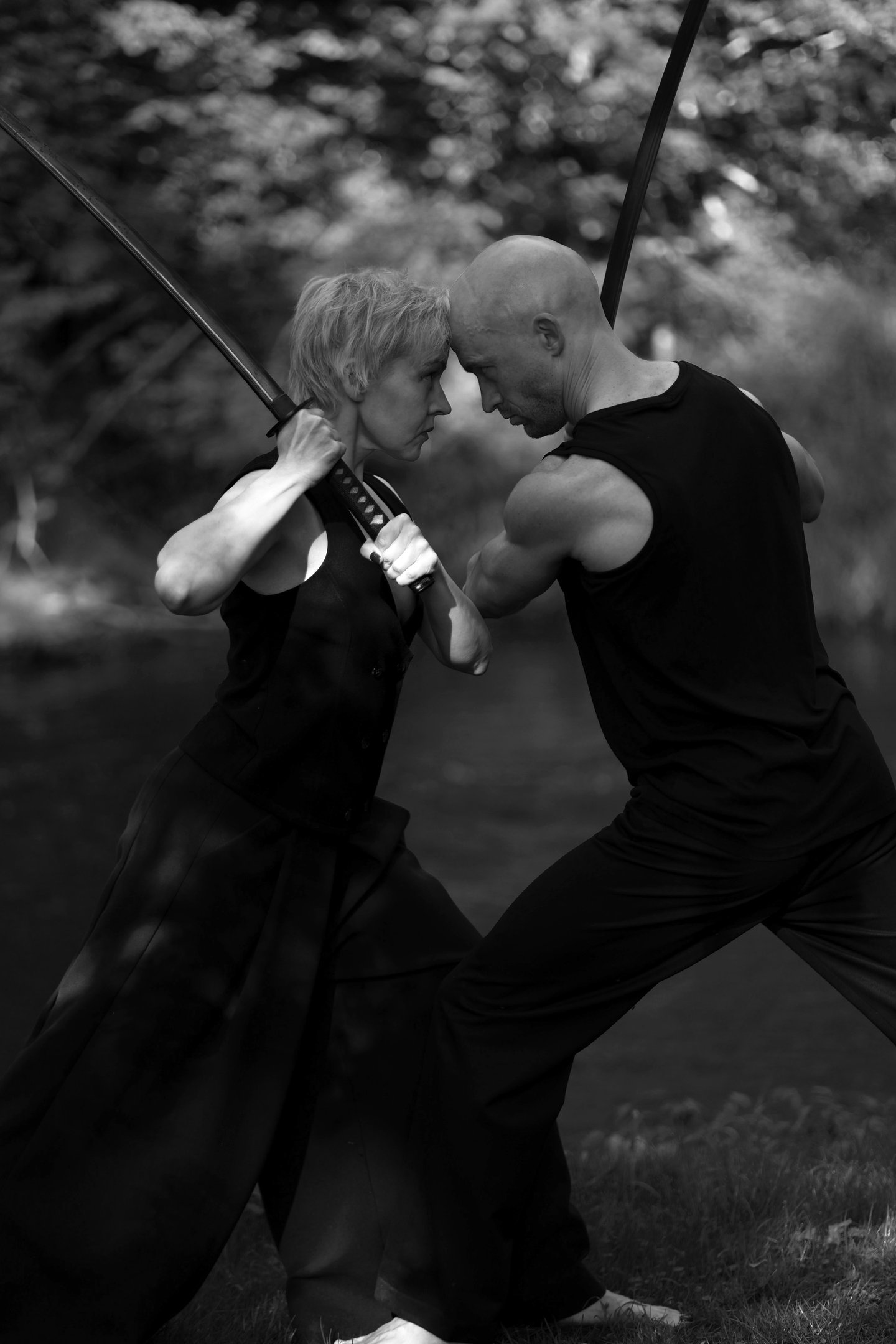
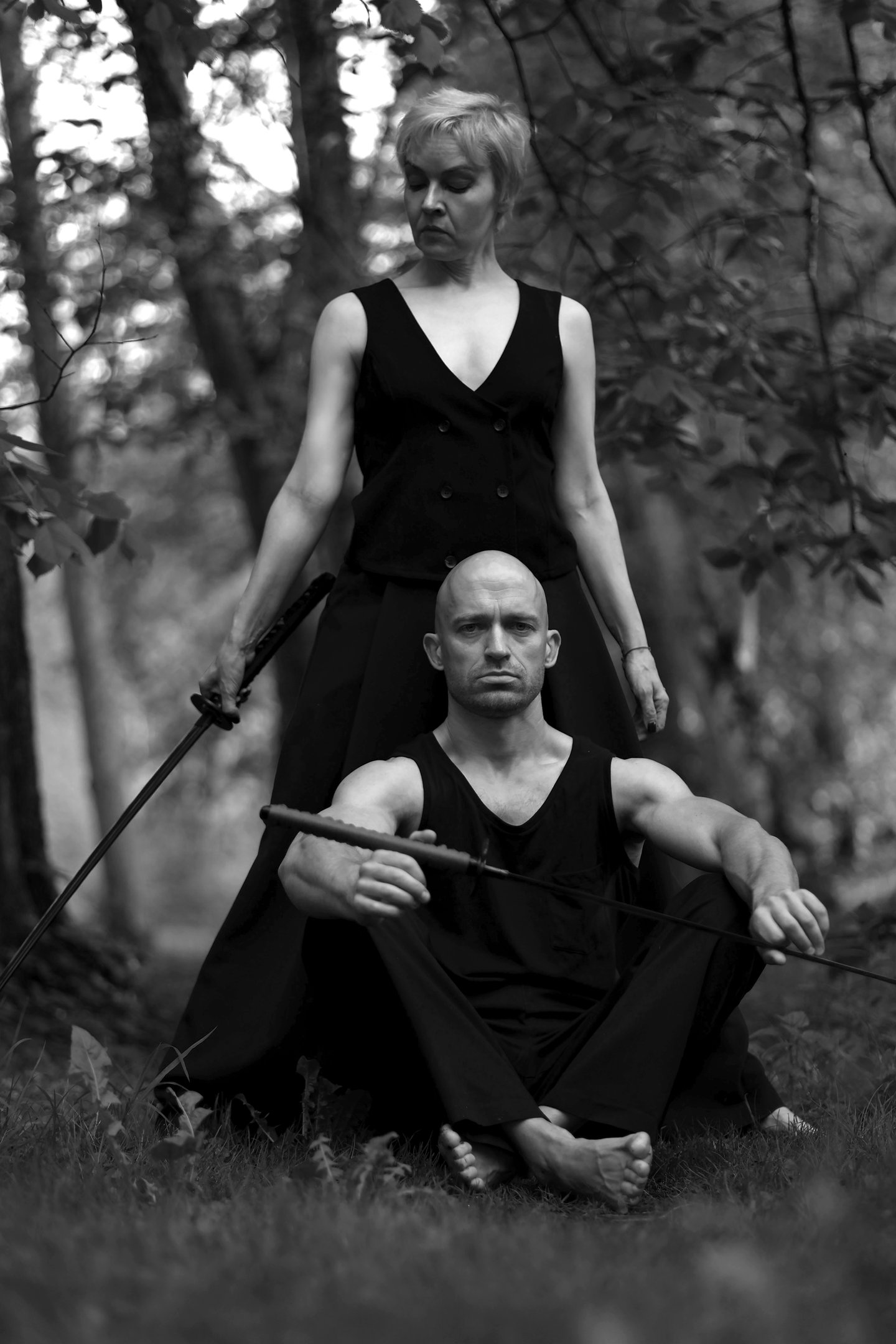
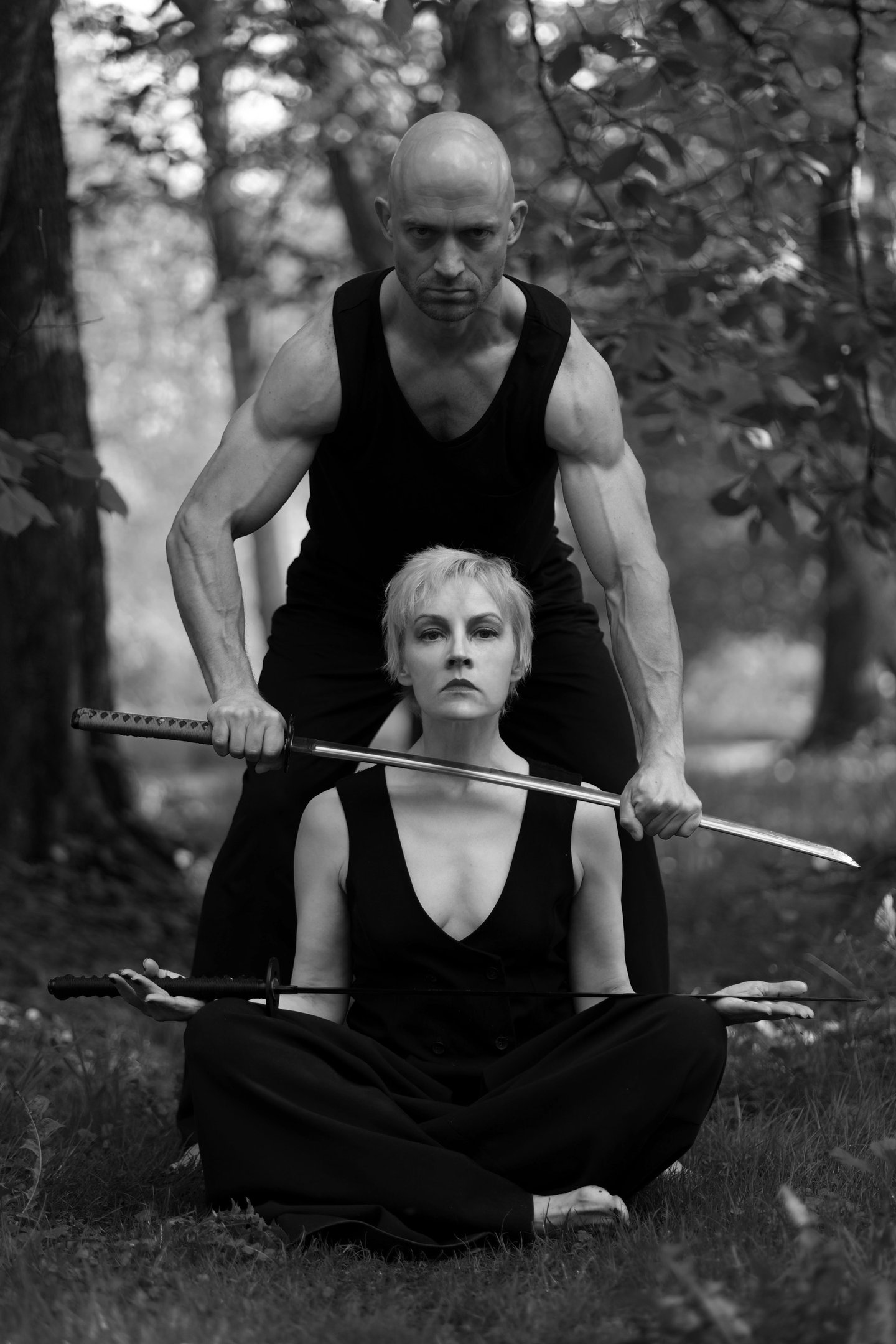
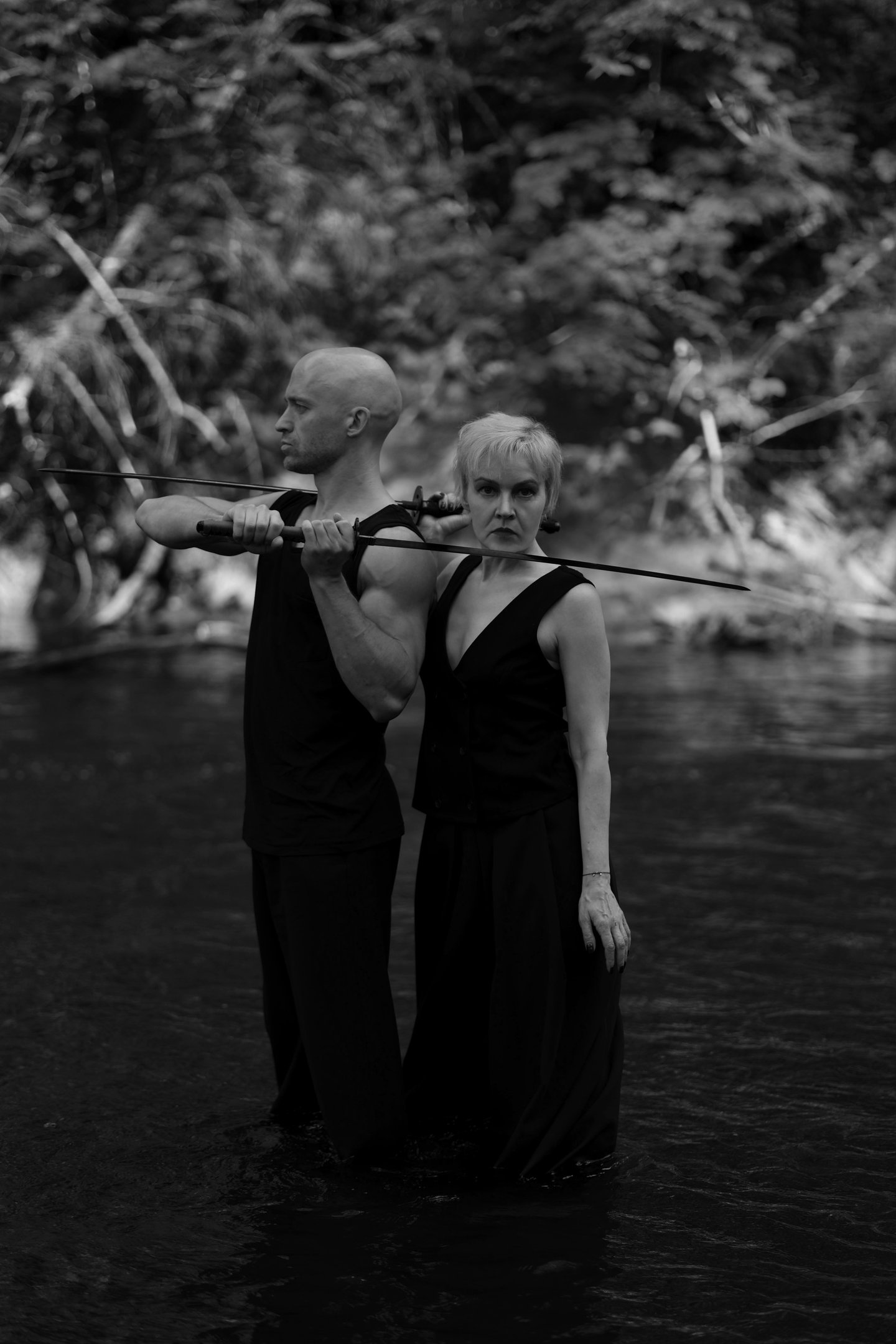
EN: He came from within — which is why he seemed a stranger. Anger took on a form: a body, a movement, a gaze. Every inner battle had fed it. This was not war — it was the first real conversation with what she had been running from.
LT: Jis atėjo iš vidaus — todėl atrodė svetimas. Pyktis įgavo pavidalą: kūną, judesį, žvilgsnį. Kiekviena vidinė kova jį maitino. Tai nebuvo karas — tai buvo pirmasis tikras pokalbis su tuo, nuo ko ji bėgo.
Woman Warrior / Moteris Karė
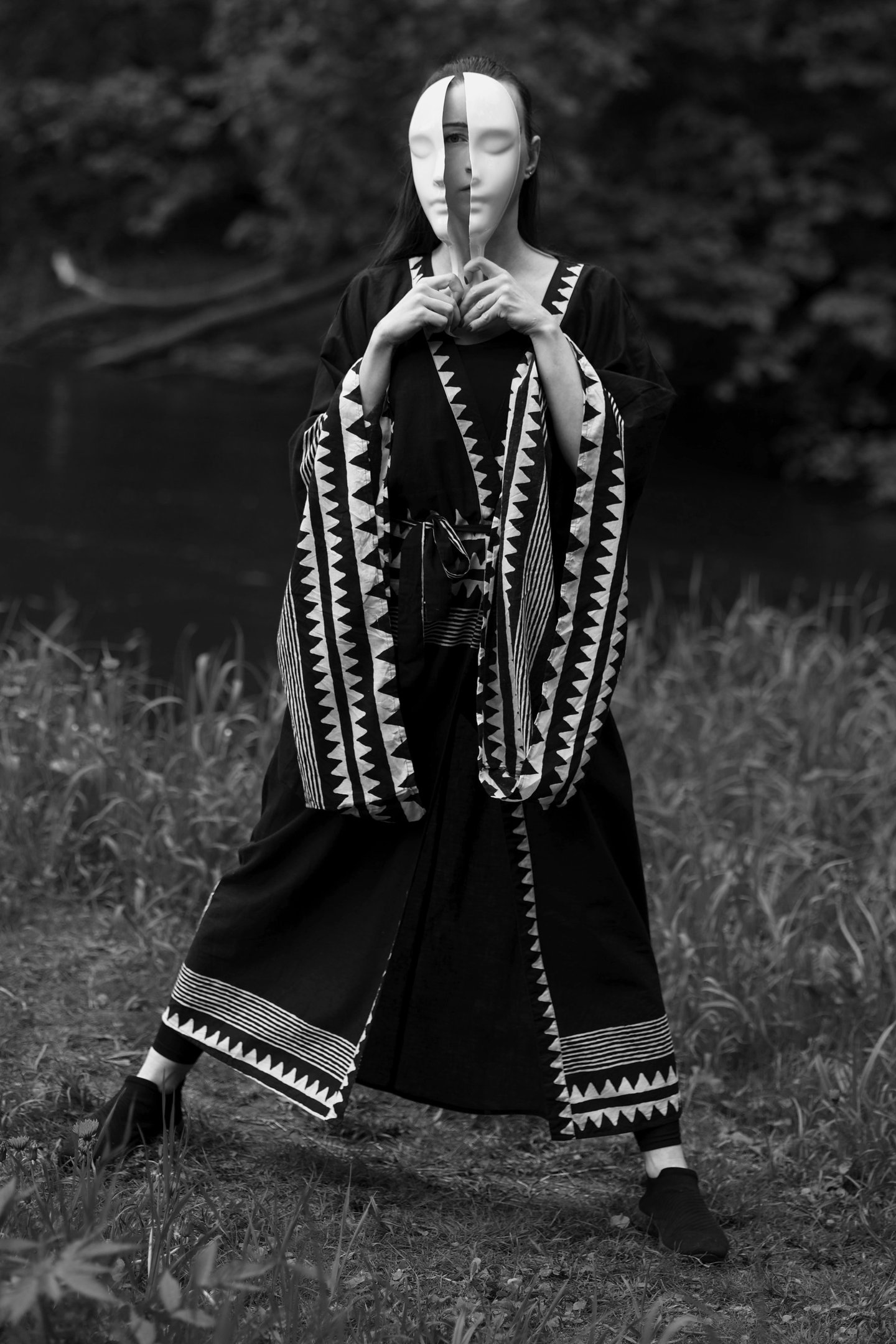
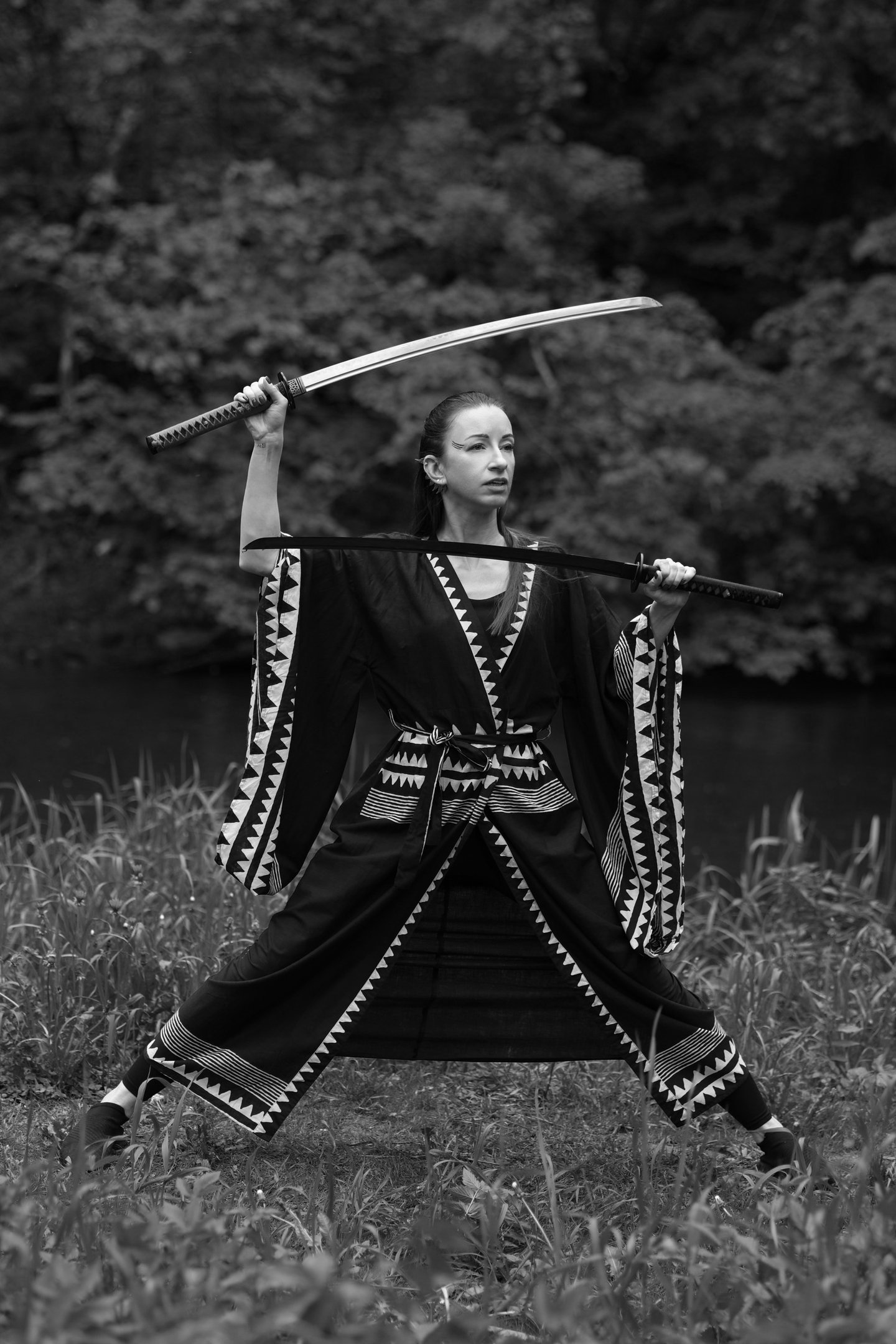
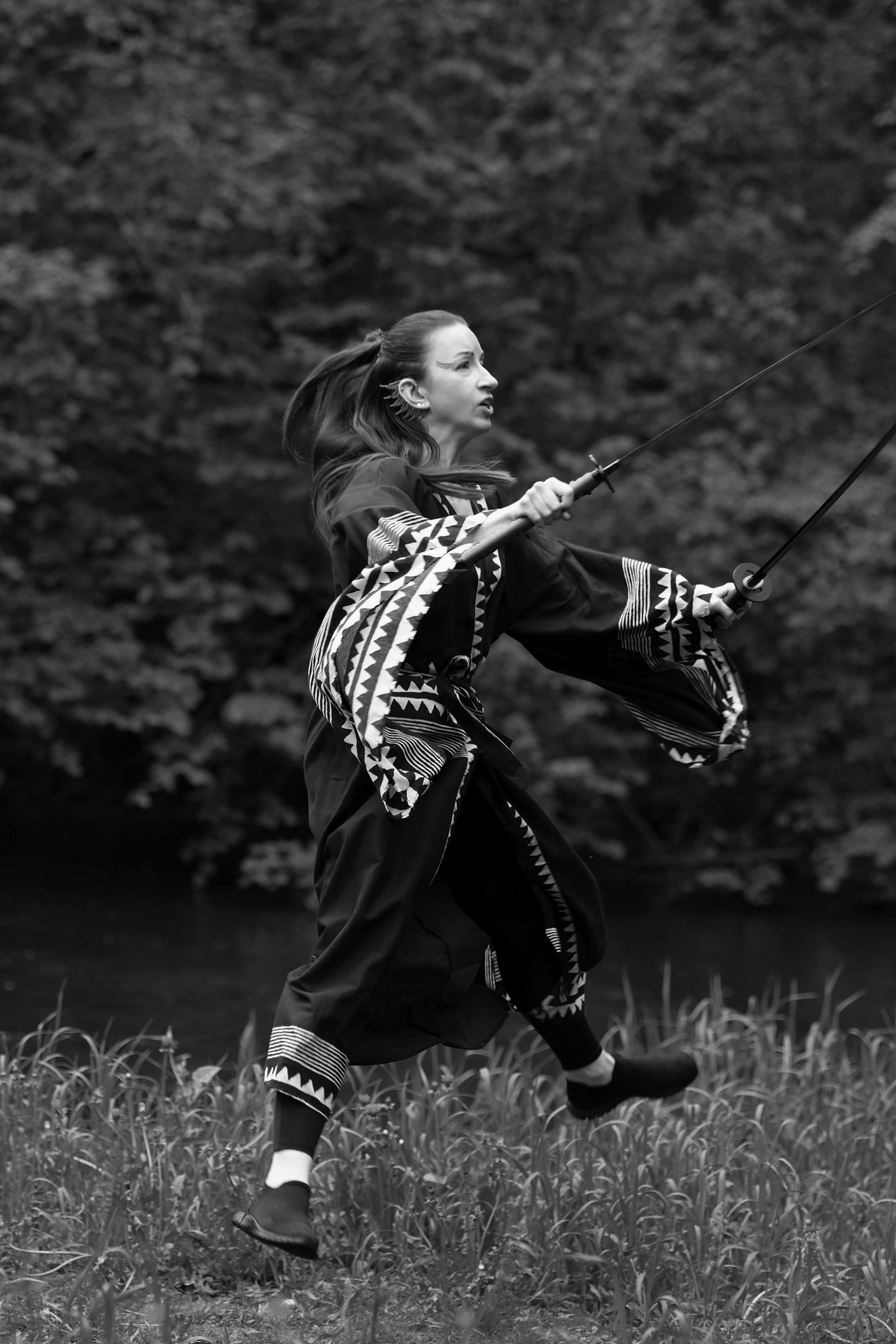
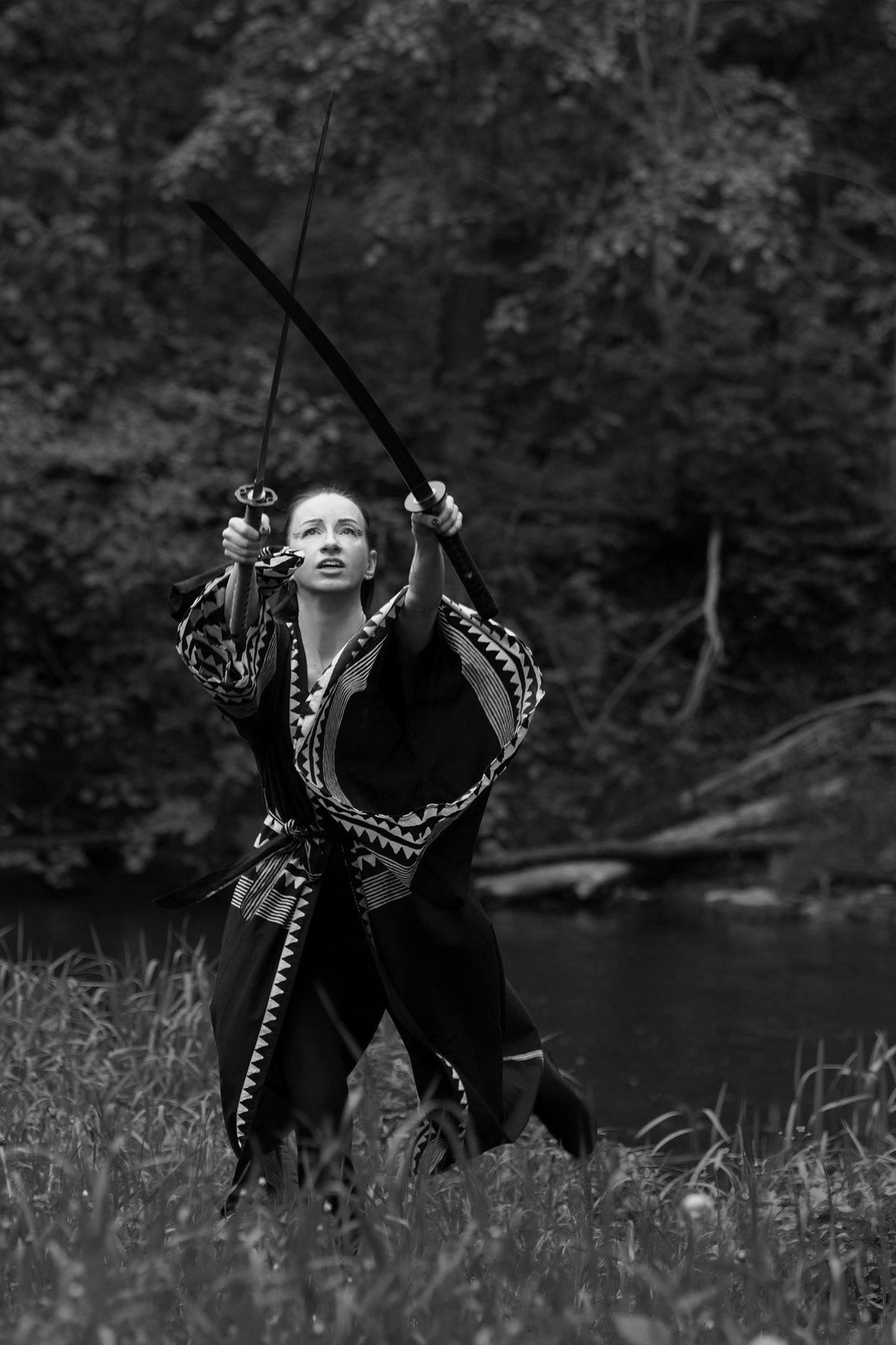
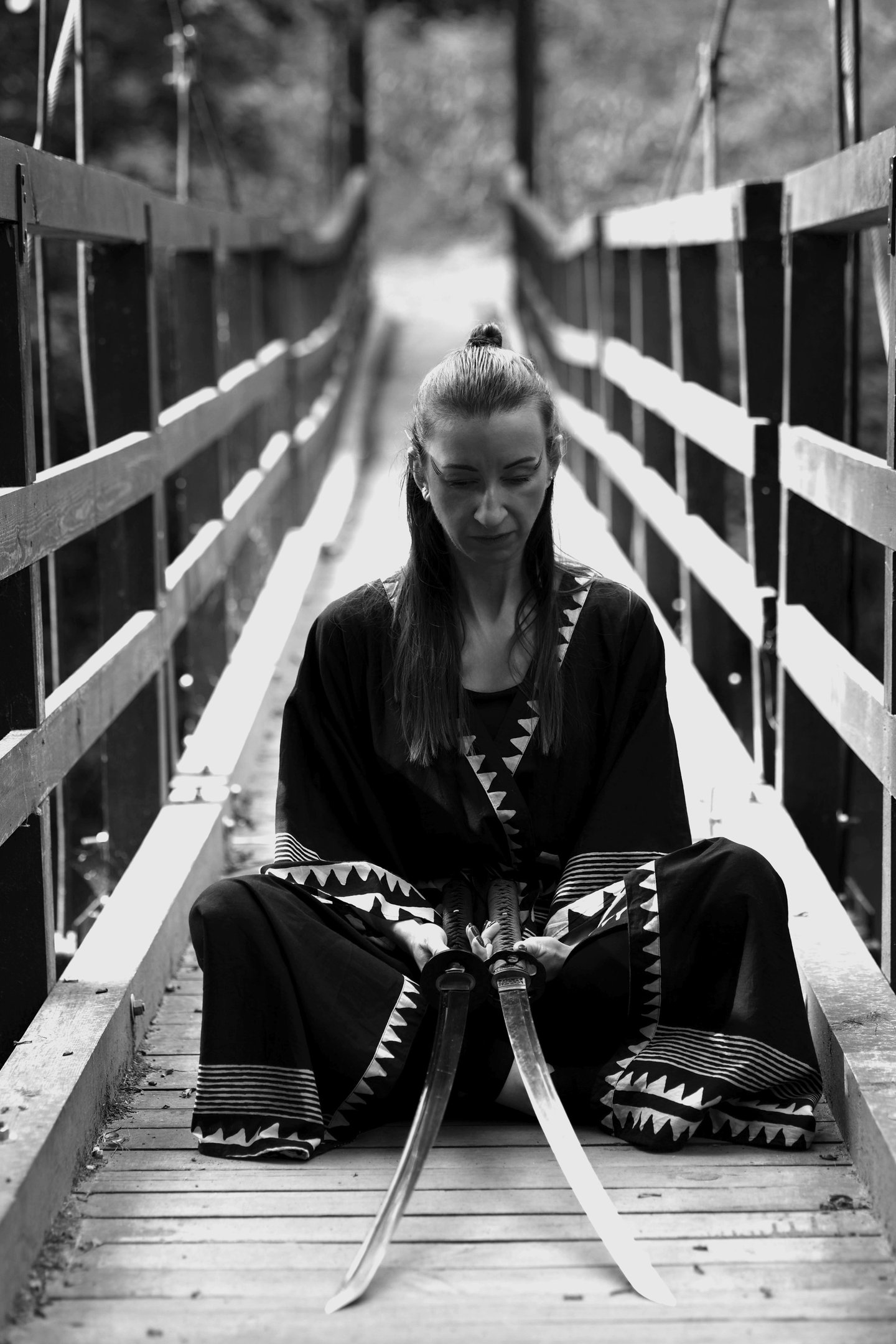
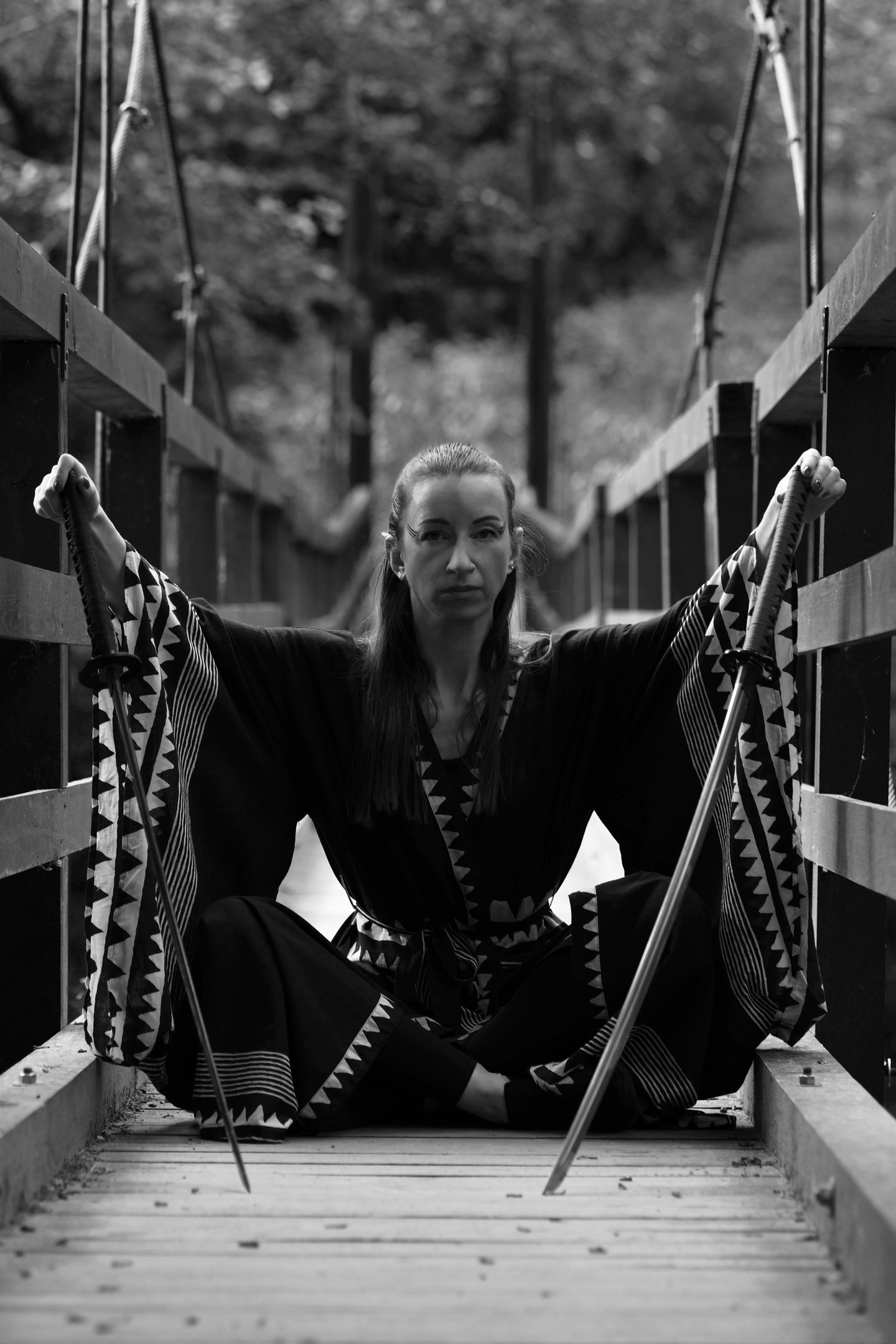
EN: She knows who she is. Inner battles do not ask permission — they rise, they burn, they make her doubt. Anger stays the longest — quiet, persistent, turned inward. But she has learned to carry it — not as a burden, but as a part of who she is.
LT: Ji žino, kas ji yra. Vidaus kovos neklausia leidimo — jos kyla, dega, verčia abejoti. Pyktis užsilieka ilgiausiai — tylus, atkaklus, nukreiptas į save. Bet ji išmoko jį nešti — ne kaip naštą, o kaip dalį savęs.